 A drug company patented a drug [drug company #1] and a generic drug manufacturer [drug company #2] filed applications for generic drugs modeled after the patented drug. #1 brought an action against #2 claiming patent infringement. After the Food and Drug Administration approved the generic product, #1 and #2 entered into a settlement whereby #2 would not bring its generic product to market for a specified number of years and would promote the patented drug in exchange for millions of dollars. The Federal Trade Commission filed suit alleging violation of section 5 of the Federal Trade Commission Act by unlawfully agreeing to abandon their patent challenges in order to share in #1’s profits on the patented drug. The United States Supreme Court noted that because the settlement requires the patentee to pay the alleged infringer, rather than the other way around, this kind of settlement is often called a “reverse payment.” The high court stated: “In sum, a reverse payment, where large and unjustified, can bring with it the risk of significant anticompetitive effects; one who makes such a payment may be unable to explain and to justify it; such a firm or individual may well possess market power derived from the patent.” (Federal Trade Commission v. Actavis, Inc. (June 17, 2013) ___U.S.___, [133 S.Ct. 2223, 186 L.Ed.2d 343].)
The California Supreme Court’s Recent Case:
“Reverse Payments” Held Anticompetitive Under California Law.
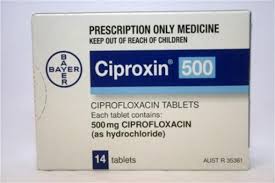
In 1987, Bayer received a patent on the active ingredient in its billion-dollar drug Cipro, and the patent expired in 2003. Barr Laboratories considered releasing a generic form of Cipro, and Bayer filed a patent infringement suit. But in 1997, Bayer and Barr settled; the settlement provided that Barr would postpone releasing its generic drug until Bayer’s patent expired. In return, Bayer agreed to pay Barr money and gave it exclusive rights to Cipro for resale. The present action arises from nine coordinated class actions which allege that the settlement violated Business and Professions Code section 16700, et seq., that it was anticompetitive under Business and Professions Code section 17200, et seq. and that it was prohibited under common law. The gravamen of the complaint is that the 1997 agreement preserved Bayer’s monopoly and ability to charge supra-competitive prices at the expense of consumers, and that Bayer in turn split these monopoly profits with Barr. After finding the settlement agreement did not restrain competition longer than the scope of the patent, the trial judge granted summary judgment, and the Court of Appeal affirmed, holding that agreements restraining competition within the scope of a patent are lawful unless the patent was procured by fraud. The California Supreme Court’s opinion begins by recognizing that antitrust law prohibits agreements that create or perpetuate monopolies, but that patent law grants temporary monopolies, and the court states: We consider here a crucial question at the intersection of these two bodies of law: what limits, if any, does antitrust law place on the ability of a patent holder to make agreements restricting competition during the life of its patent? In particular, when another entity tries to invalidate a patent and enter the marketplace, can the patentee pay the would-be competitor to withdraw its challenge and refrain from competing until at or near the natural expiration of the potentially invalid patent‘s life?” California’s high court followed the holding in Federal Trade Commission v. Actavis, Inc. (2013) ___U.S.___, [133 S.Ct. 2223, 186 L.Ed.2d 343], stating: “We conclude the same is true under state antitrust law. Some patents are valid; some are not. Sometimes competition would infringe; sometimes it would not. Parties illegally restrain trade when they privately agree to substitute consensual monopoly in place of potential competition that would have followed a finding of invalidity or non-infringement.” (In re Cipro Cases I & II (Cal. Sup. Ct.; May 7, 2015) 61 Cal.4th 116, [187 Cal.Rptr.3d 632, 348 P.3d 845].)